

As South Africa holds its seventh democratic elections this week, voters will for the first time receive three ballot papers instead of two ballots.
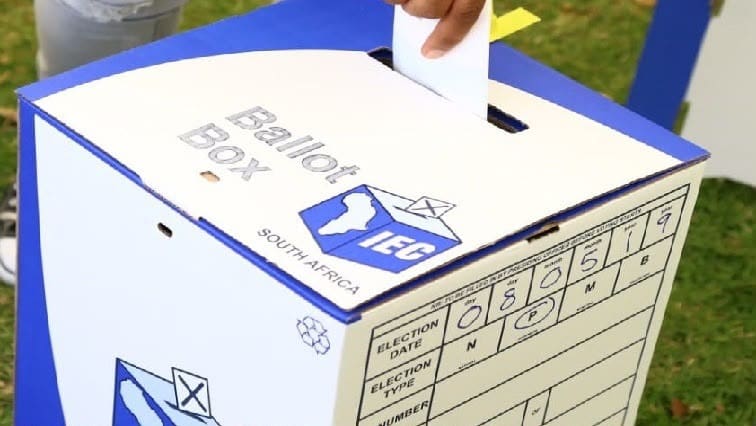
The Electoral Commission (IEC) has urged voters to carefully review and mark each of these three ballot papers before depositing them into the ballot box.
“Our appeal to voters is to remember that they can only put one mark on each ballot, more than one mark will result in a spoiled vote and not counted.
“The Universal Ballot Template (UBT), whose dimensions are benchmarked against the longest ballot paper will be available in all voting stations. The UBT can be used by blind and partially sighted people, low-vision users, people who are dyslexic, and people with motor and neuron conditions which do not allow for a steady hand,” IEC Chief Electoral Officer (CEO) Sy Mamabolo said.
South Africans will go to the polls on 29 May 2024 to vote for leaders in government for the seventh administration.
The 27.79 million registered voters will receive three ballot papers to elect candidates to represent them in the National Assembly and Provincial Legislatures.
The use of the three ballots follows the amendment of the Electoral Act, which was signed into law in April 2023.
“This amendment revised the electoral system to allow independent candidates to contest in the regional (province-to-national) tier of the National Assembly and the Provincial Legislatures.
“Although the phenomenon of three ballots will be familiar to voters in various local municipalities, it will be new to voters in metropolitan areas and for the first time in general elections for national and provinces,” Mamabolo said.
WATCH I Three ballots explained
The three ballot papers are as follows:
- The national ballot: This ballot will consist of a list of political parties vying for seats for 200 seats in the National Assembly. This ballot will be used to vote for political parties. There are currently 52 parties who will be on this ballot and the configuration will be a dual column.
- The regional or province-to-national ballots: This will have political parties and independent candidates contesting for the seats reserved for each province in the National Assembly. Voters will use this ballot to elect a political party or an independent candidate to represent them in the National Assembly. The number of contestants range from 30 to 44 on regional ballots. The configuration of this ballot is single column.
- The provincial ballots: This ballot is unique to each province and includes parties and independent candidates competing for seats in each respective provincial legislature. This ballot will allow voters to choose either a political party or an independent candidate to represent them in provincial legislatures. The number of contestants range from 24 to 45 on the provincial legislatures ballots.
The commission said the design of the ballot papers will be underpinned by the following identifiers:
- Full registered name of the party
- The photograph of the registered party leader
- Registered abbreviated name of the party
- The registered emblem or symbol of the party
In respect of independent candidates, the ballot papers will have:
- The name of the independent
- The photograph bearing the face of the independent
- The word “INDEPENDENT”
There are a total of 400 contested seats in the National Assembly. The proportional representation compensatory 200 seats will be contested by political parties only and there is a dedicated ballot paper for this tier of the National Assembly.
“The remaining regional or province-to-national 200 seats will be contested by independent candidates and political parties. This tier of the National Assembly will also have a dedicated ballot paper. This means that National Assembly elections will be based on two ballot papers (national ballot and the newly introduced regional or province-to-national ballot).
“Therefore, in respect of the elections of the National Assembly voters may elect a preferred party on the national ballot and elect another preferred party or independent on the regional ballot. However, in respect of provincial elections, voters will elect a preferred party or independent candidate on a single provincial ballot,” the CEO said.




Leave a Reply