
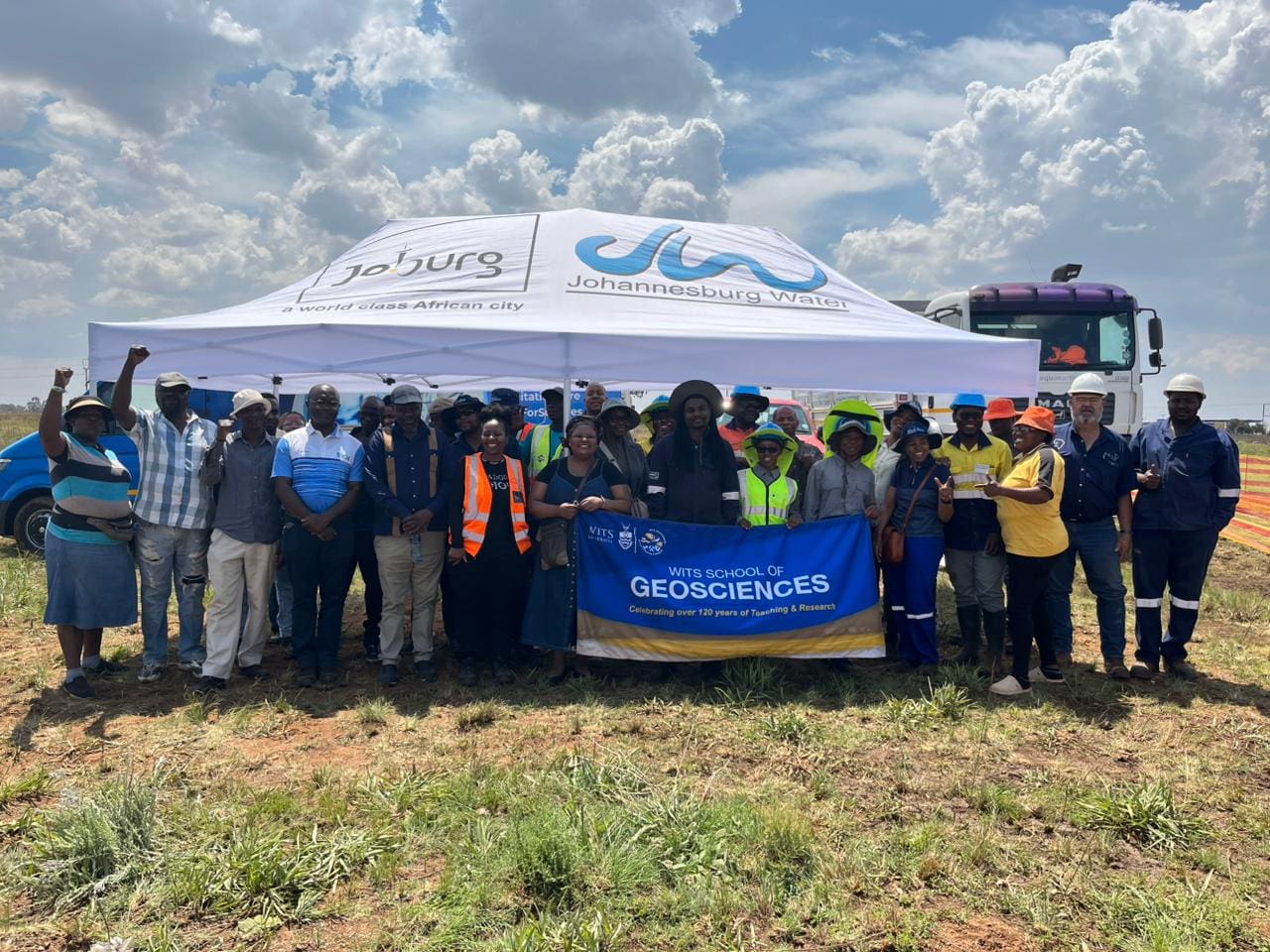
Johannesburg Water, in partnership with Wits Enterprise, has launched a groundbreaking underground water pilot project to tackle long-standing supply challenges in the city’s informal settlements.
The initiative will test the use of underground aquifers as an additional source of safe and reliable water, supplementing the city’s strained bulk infrastructure. Work is already underway in Water Works, Marikana, and Kokotela informal settlements, with drilling of boreholes and installation of community water points. Next in line are Phumla Mqashi and Narens Farm.
“This innovative project marks a significant step in addressing water supply challenges in underserved communities across Johannesburg,” said Johannesburg Water Managing Director, Ntshavheni Mukwevho. “By tapping into aquifers, we can ensure all residents — regardless of where they live — have consistent access to safe water.”
Johannesburg’s Deep South, especially Lenasia South, Lawley, Ennerdale, Orange Farm and surroundings has for years faced erratic supply due to population growth, high numbers of informal settlements, and illegal water connections that place immense strain on existing systems. According to recent reports, entire neighbourhoods have endured frequent water cuts, forcing residents to rely on tankers or unsafe sources. Community leaders say the crisis has been compounded by ongoing vandalism and unlawful connections, which disrupt distribution and lower pressure in already overburdened pipelines. Residents in Ennerdale and Lawley recently raised concerns that outages are becoming more frequent and prolonged, leaving families without water for days at a time, while in Lenasia South residents face water outages daily.
The underground water pilot is the first project of its kind in Johannesburg designed specifically for informal settlements, where formal infrastructure is often absent. The pilot will run across nine settlements in Region G, aiming to demonstrate sustainability and scalability before being rolled out citywide.
Local residents have welcomed the project, pledging to safeguard the boreholes and distribution points. “Water is life, and we are grateful for this project. We will protect it because it is our lifeline,” one community representative said.
The project could ease pressure on Joburg’s overstretched water systems, reduce reliance on costly emergency interventions like tankers, and provide a more reliable service to thousands of households who have long been on the margins of basic service delivery. If successful, the pilot will serve as a model for other parts of Johannesburg — and potentially, cities across South Africa — where water scarcity, rapid urbanisation, and infrastructure backlogs converge.