
Lenasia will celebrate 70 years of its existence with a series of colourful sporting, cultural and socio-political events during the year. The Lenasia Secondary School,
which was opened in February 1955, will also be celebrating its 70th platinum anniversary, starting with an open day for its alumni on 1February.
The predominantly “Indian” township, nestled comfortably along the bustling N12 freeway, the Lenz military base and the sprawling African township of Soweto, had its first residents moved into the area in 1955. They were housed in 25 “huts” at the Cape
Coloured Military Camp, located in what is now the Lenasia CBD. These buildings are still in existence and are used for business purposes. The township was established by the racist National Party as a “group area for Indians” interms of the hated Group Areas Act, which was the cornerstone of the apartheid system.
A government proclamation issued on 3 August, 1956, determined that Lenasia and Farm Rietfontein No.48 were to be reserved for “Indian occupation”, which at that stage was outside the municipal boundary of Johannesburg. About 1 600 morgens of land was set
aside to accommodate 2 600 stands for Indian housing development. Over the next decade several thousand families were forcibly moved from racially mixed areas such as Sophiatown, Vrededorp, Fordsburg and Kliptown to a barren piece of land
named Lenasia, with virtually nothing in the way of social amenities and public infrastructure.
Over time these residents developed mosques, churches, temples and related educational institutions to give expression to their religious and cultural lives. They established an array of civic, social welfare, cultural, sporting and educational organisations to lead a more fulfilling existence, to support the poor in the evolving community and to create a new social identity.
Lenasia has changed since the late 1980s into a non-racial community with the occupation of land by residents of the Thembelihle informal settlement. It is estimated that at least 30 000 African residents live in the informal settlement, including Lenasia.
Its schools are desegregated and the labour force in the business and industrial zone is racially mixed. Daily about 900 minibus taxis transport learners from Soweto and neighbouring informal settlements to schools locally. What was meant to be an “Indian”
area under apartheid has transformed into a non racial, multi-religious and multi-ethnic
community.
Lenasia is a community rich in social, cultural and political history. Its ‘beginnings’ can be traced back to South Africa’s broader liberation struggle. As early as May 1910, the famous Indian resistance leader, Mohandas Gandhi, established a communal base at
Tolstoy Farm – barely five kilometres from Lenasia – for his passive resistance movement against race discrimination and segregation in the country.
It was here that a small community of Gandhian adherents lived and implemented aspects of the Mahatma’s philosophy of self-reliance, personal discipline, manual work and humble co-existence
Tolstoy Farm, named after the Russian novelist and philosopher, Leo Tolstoy, is located on the south-western outskirts of Lenasia. It is from here that Gandhi, together with leaders such as Thambi and Veerammal Naidoo and Ahmed Mahomed Cachalia,
propagated the ideology of “satyagraha” or passive resistance in the face of British and Afrikaner racial oppression. Tolstoy Farm became the nerve centre of the passive resistance movement in the first decade of the twentieth century. Perhaps it was in appreciation of this initial political legacy that former President Nelson Mandela honoured Lenasia with six public appearances. He addressed the largest
political meeting in the community on 18 November, 1990, at the Lenasia Cricket Stadium, shortly after his release from prison.
In the early 1970s, adherents of the Black Consciousness Movement awakened the consciousness of the youth to take up the struggle against apartheid after leaders and members of the Transvaal Indian Congress (TIC) and the African National Congress (ANC) were banned, imprisoned and exiled due to intense government repression in the 1960s.
Led by an expelled teacher, Sadecque Variava, they mobilised a younger generation of
activists using culture and the ideology of black consciousness to challenge apartheid. This was followed by the formation of the Azanian People’s Organisation branch in Lenasia led by Variava and the slain medical doctor, Abubakr Asvat. By the end of that decade Congress politics was revived in the area as younger activists such as Ismail Momoniat and Mohamed Valli Moosa re-established contact with TIC
leaders such as Dr Essop Jassat, Dr RAM Salojee, Reggie Vandeyar, Shirish Nanabhai and
Prema Naidoo, whose banning orders had either expired or who were released from prison. They played a major role in leading the community against apartheid.
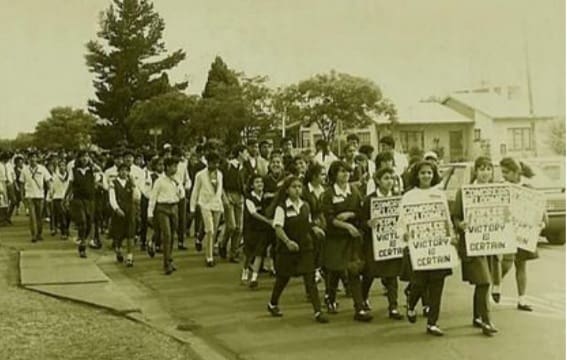
The turning point in the community’s political history was undoubtedly the students’ boycott of classes in April 1980. Over three thousand school students walked out of classes for almost three months in solidarity with boycotting students in the Western
Cape and in protest against the inequalities in the apartheid education system. The result
was that the elections that were held in 1981 for the racist South African Indian Council was boycotted by most voters in Lenasia.
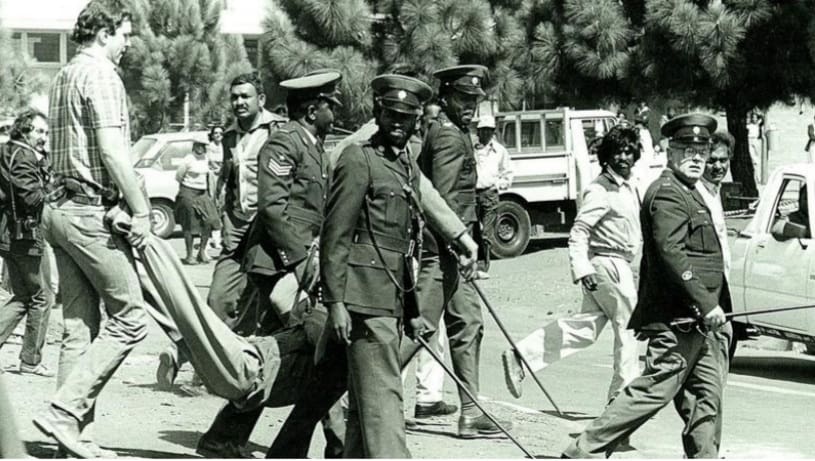
A similar fate awaited the Tricameral parliament three years later. On the very day of the first elections for the House of Delegates on 28 August, 1984, there were violent confrontations at the Lenasia Civic Centre polling station between police and students,
workers and residents, who called for a boycott of the polls. This resulted in over a hundred people being injured and the discrediting of the all-Indian parliamentary chamber.
Sporting bodies across codes such as soccer, cricket, table-tennis, athletics and swimming rejected apartheid bodies and instead affiliated to the non-racial South African Council on Sport. Lenasia’s two professional soccer clubs, namely, Bluebells United and Swaraj, were leading teams in the non-racial Federation Professional League.
After the first democratic elections in April 1994, seven political activists from Lenasia were sworn-in as Members of Parliament, namely Ahmed Kathrada, Laloo Chiba, Dr RAM Salojee, Mohamed Valli Moosa, Ismail Vadi, Mosheen Moosa and human rights lawyer, Priscilla Jana.
Seven decades later is a time to celebrate our people’s history. It’s a time for reflection of the past and chart a dynamic future for our community. We call on all community organisations to integrate the Lenz70 celebrations into their programmes this year.
Community, political, educational, cultural, sporting and religious organisations are encouraged to write their histories as part of the process of recording our past.
We would like to collect historical photographs of Lenasia and local newspapers such as the
Lenasia Times, the Rising Sun, the Southern Globe and The Indicator, including online platforms, can play a big role in this effort.
We’re inviting students to interview civic and political leaders, including the surviving first residents of Lenasia. We call on local radio stations to host special programmes celebrating the 70th birthday of our community. Importantly, we should discuss the future of Lenasia – what is our vision and what would
we like our community to become in future. This must be a people-driven exercise and everyone in the community is called upon to celebrate this milestone. Interested persons can contact him on 082 772 3119.
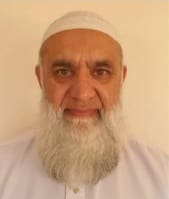
By: Dr Ismail Vadi is a former ANC MP and MEC for Roads and Transport in Gauteng.
Part 2 will follow next month.