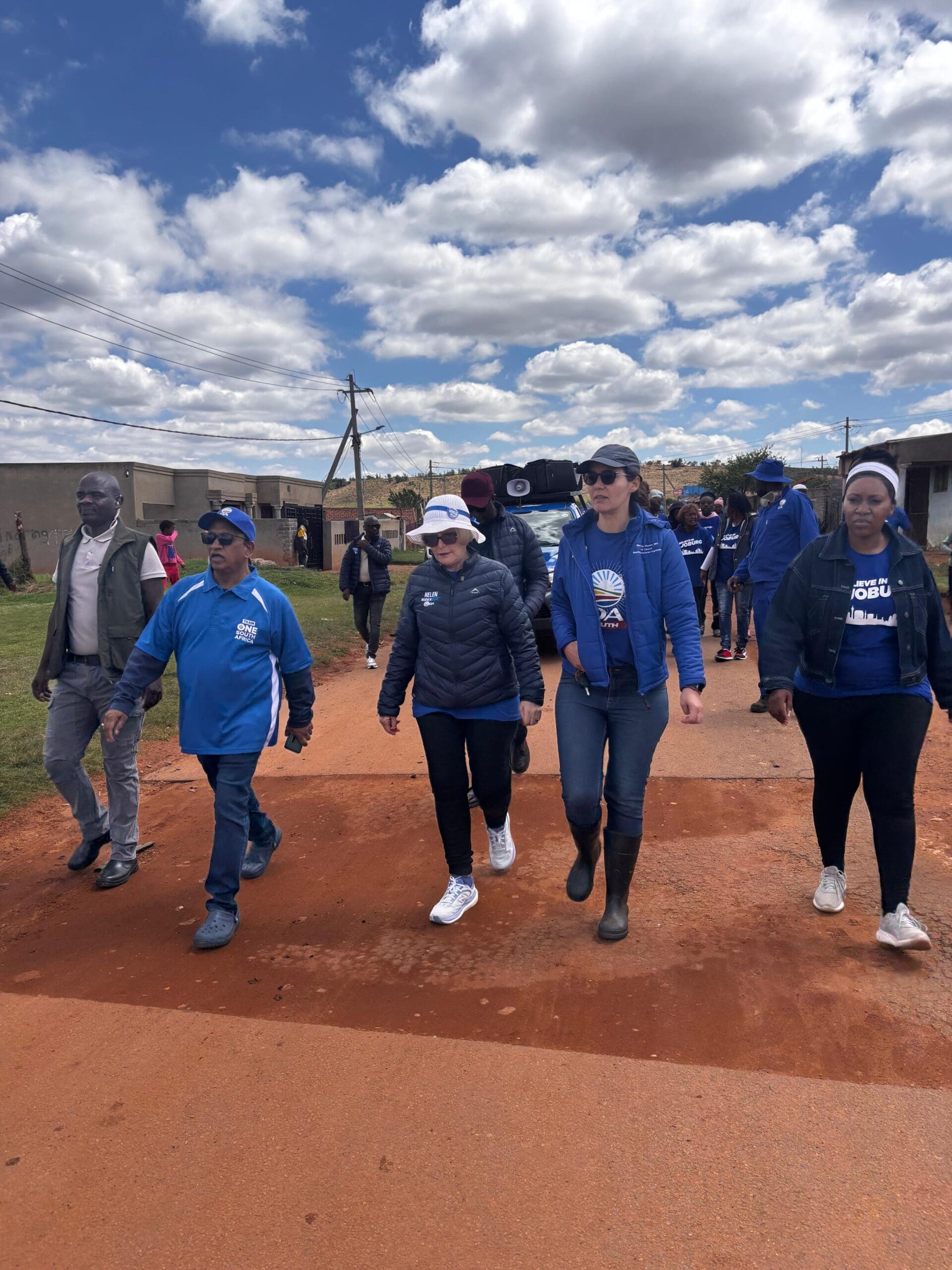
Democratic Alliance (DA) Johannesburg mayoral candidate, Helen Zille, took the party’s campaign to Ward 120 in Lenasia South on Thursday, with the area’s persistent water problems and infrastructure challenges dominating an oversight visit that ended at the Lenasia Reservoir.
Zille was accompanied by Ward 120 candidate Kishore Badal and DA PR candidate Keneilwe Mokgora, and members of the DA. The visit began in the 525 Private Lands area, where the DA team had planned to conduct door-to-door engagements with residents. The planned campaign was changed after concerns were raised that some of the residents the team intended to visit had allegedly been intimidated.
Instead, Zille and the delegation walked around the block, speaking to people in the area and observing conditions on the ground.
“Vote for yourself,” Zille told residents during the engagement, urging them to consider the kind of city they want to leave for future generations and to support the political party they believe can deliver that city.

Three issues noted by the DA representatives during the engagement were water shortages and infrastructure, illegal land occupations and xenophobic attacks, with residents also raising concerns about broader racial tensions. The DA said 85% of people engaged during the campaign identified water as their main concern.
The concern comes despite the area being served by major water infrastructure. Johannesburg Water’s records show that the Lenasia High Level Reservoir serves areas including Lenasia South extensions, Lehae, Vlakfontein and Zakariyya Park. The utility also lists the Lenasia South Terminal Reservoir among the reservoirs serving the broader area. The water infrastructure has previously been expanded specifically to address supply problems.
In June 2022, Johannesburg Water launched a new 15-megalitre Lenasia High Level Reservoir to supplement an existing 6-megalitre reservoir that had been unable to meet demand. The project was intended to increase storage capacity and improve the reliability and duration of water supply to surrounding communities.
Speaking to GLOBE POST, residents questioned how they could continue experiencing water shortages when major water infrastructure is located in their area.
“How can we continue experiencing water shortages when we have major water infrastructure right here in our area?” they asked.
The delegation then moved to the Lenasia Reservoir, where Zille inspected the facility and discussed the area’s water supply with members of the DA team.
The visit highlighted the gap between the existence of water infrastructure and residents’ experience of reliable supply.
Johannesburg Water’s own records show that the Lenasia system has faced supply and demand pressures for years. In 2020, the City said demand at the Lenasia Hospital Hill and High Level reservoirs was exceeding available supply and that infrastructure upgrades were required.
GLOBE POST asked Zille what a DA-led Johannesburg would do differently to ensure that service-delivery complaints receive faster responses in areas such as Lenasia South.
Zille told GLOBE POST that the first step would be to establish a detailed picture of where services are failing and prioritise interventions according to need.
She also said understanding who owns land in areas affected by illegal occupations and the unlawful selling of plots was critical, arguing that government cannot simply install infrastructure without establishing the legal status of the land.
“Knowing who owns the land is absolutely critical,” Zille said.
Zille also pointed to the City’s finances as a constraint, saying: “Joburg is bankrupt, and you can’t do anything without money.”
She said a DA-led administration would seek to stabilise the City’s finances while protecting funding for essential services such as water and electricity.
According to Zille, communities without reliable water would need to be prioritised according to need, with interventions directed at areas experiencing the most severe shortages. She also mentioned alternative water sources, including groundwater, as an option in areas where the water is sufficiently clean for household use, while stressing that solutions would depend on each community’s circumstances.
Her comments put the focus on a central question for residents: whether existing infrastructure is being supplied, maintained and upgraded sufficiently to translate investment into a reliable service at household level. Zille’s Ward 120 visit brought that question directly into the local government election campaign, placing water, infrastructure, municipal finances and the speed of service-delivery responses at the centre of the political contest in Lenasia South.
Join DA Joburg mayoral candidate, Helen Zille, for the Ward 120 town hall meeting in Lenasia South on Monday, 05 October.




Leave a Reply