
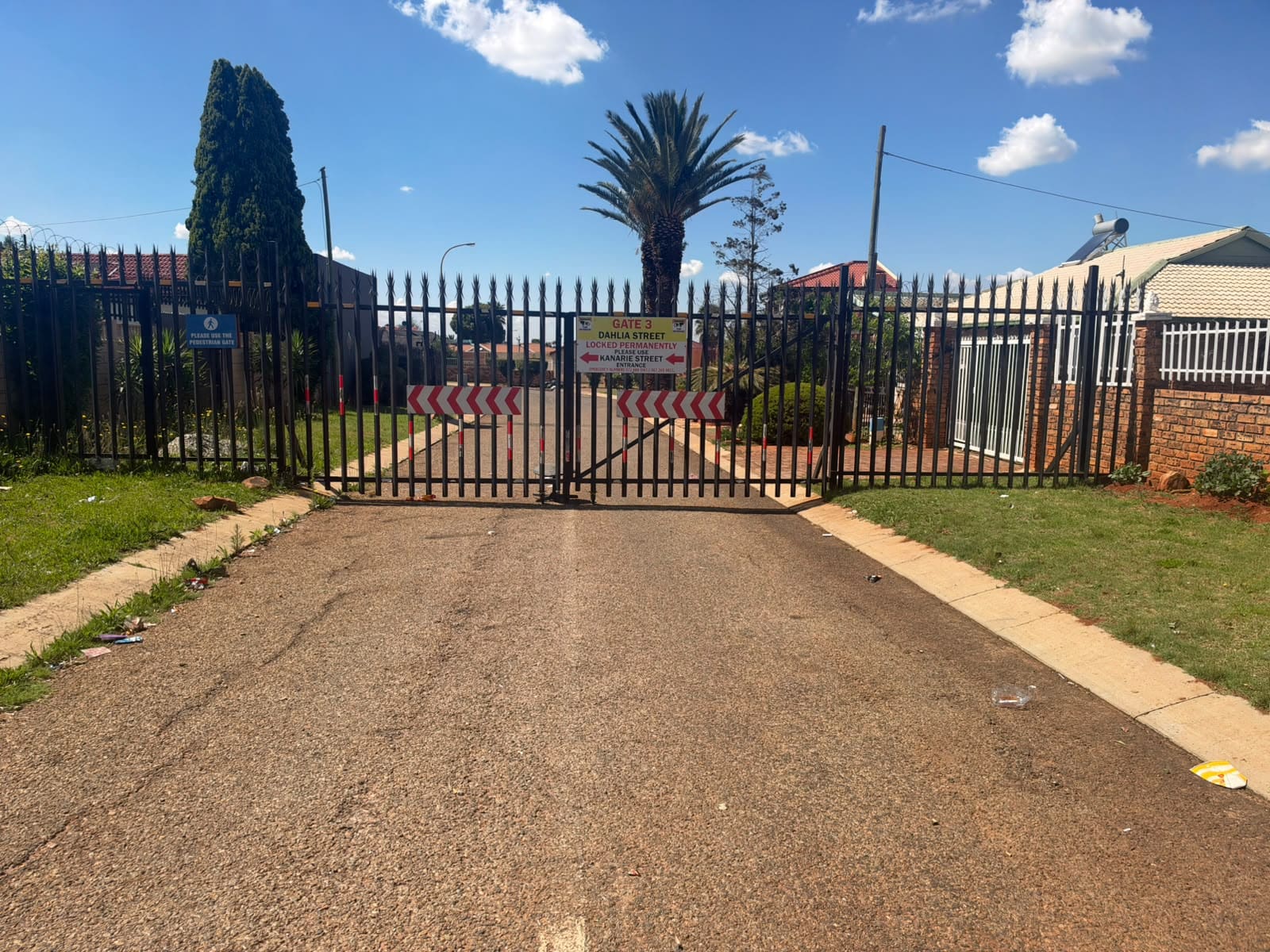
While residential robberies are declining across South Africa, Lenasia South is moving in the opposite direction. The latest crime statistics reveal a disturbing 50% increase in robberies at residential premises, raising fresh concerns about community safety and whether the boom gates installed across parts of the suburb are delivering the protection residents expect.
According to the South African Police Service (SAPS) second-quarter crime statistics for July to September 2026, Lenasia South recorded 30 residential robbery counts, compared with 20 during the corresponding period in 2025.

This represents an increase of 10 counts, placing Lenasia South 20th nationally and fourth in Gauteng for robbery at residential premises, based on reported counts.
The latest figure is also the highest recorded by the Lenasia South Police Station for the July-to-September reporting period over the past five years.
Behind these numbers lies a troubling reality: during the three-month reporting period, the precinct recorded the equivalent of approximately one residential robbery count every three days.
For a community that has invested considerable effort and resources in neighbourhood security, the statistics raise an unavoidable question: Are the measures working?
A community moving against the national trend
The situation in Lenasia South contrasts sharply with the broader improvements reported by SAPS.
Nationally, robbery at residential premises decreased by 7%, from 5,103 recorded counts between July and September 2025 to 4,745 during the same period this year.
Gauteng also recorded an improvement, with residential robberies declining by 8.8%, from 1,646 to 1,501 counts.
Yet Lenasia South experienced a 50% increase.
This is not the first warning sign.
In September, Globe Post reported that residential robberies in the Lenasia South policing precinct had already increased during the April-to-June quarter, rising from 19 in 2025 to 22 in 2026.
The latest figures therefore mark a second consecutive reporting quarter in which residential robberies increased compared with the corresponding period a year earlier.
While national and provincial authorities have welcomed declining crime figures, the experience of communities such as Lenasia South demonstrates that improvements at national level do not necessarily translate into safer neighbourhoods.
Boom gates: Protection or false sense of security?
Over the past few years, residents in several parts of Lenasia South have taken neighbourhood security into their own hands.
Boom gates, security barriers and controlled access points have become increasingly visible as communities attempt to prevent criminals from freely entering residential streets.
The reasoning is straightforward: restrict access, monitor suspicious vehicles and make it harder for criminals to enter and escape unnoticed.
But does the strategy actually reduce crime?
In July 2025, Globe Post reported that security companies and SAPS had claimed substantial reductions in crime within gated areas of Ward 120.
There were also claims that criminals were increasingly targeting streets without boom gates.
If these claims are accurate, they suggest that neighbourhood security barriers could be deterring criminals in certain areas.
However, they also raise another concern: Is crime being prevented, or simply displaced from one neighbourhood to another?
The latest SAPS figures cannot answer that question on their own.
Crime statistics are reported at police-station level rather than broken down publicly into individual gated and ungated streets in the quarterly report.
The increase across the Lenasia South policing precinct therefore does not prove that boom gates have failed. Equally, claims of reduced crime within particular gated communities require supporting evidence.
What is needed is a clearer picture of where residential robberies are occurring, whether those locations have security restrictions and how crime patterns have changed since boom gates were introduced.
Another problem: No boom gates formally approved
The debate surrounding boom gates is not limited to whether they prevent crime.
Their legal status has also been under scrutiny.
On 28 October 2026, Globe Post revealed that the Johannesburg Roads Agency (JRA) had confirmed that no boom gates had received formal approval in Lenasia South.
JRA Deputy Director of Transport Systems Management Nobuntu Duze confirmed that four applications had been submitted since the previous year but remained pending.
“No gates have been approved yet for the entire area,” Duze told Globe Post.
This was despite a temporary reprieve granted in 2025, allowing communities additional time to comply with the City’s Security Access Restrictions Policy.
The controversy became particularly significant following the experience of a 78-year-old Dahlia Street resident who uses a walker.
Globe Post reported how a locked security gate forced her to travel a considerably longer distance to access her street. The gate was subsequently reopened and manned.
Her experience highlighted the difficult balance between protecting communities and ensuring that security restrictions do not prevent elderly residents, people with disabilities or emergency services from accessing public streets.
The challenge is no longer simply whether security gates should remain.
It is whether they are lawful, accessible and effective.
National Commissioner: Behind every statistic is a victim
Speaking during the release of the second-quarter crime statistics on Friday, 20 November, SAPS National Commissioner General Fannie Masemola welcomed the decline in several serious crime categories.
However, he cautioned against complacency.
“We are not complacent,” Masemola said, emphasising that behind crime statistics are victims, families and communities affected by criminal activity.
The National Commissioner outlined intensified intelligence-driven operations aimed at disrupting criminal networks, recovering illegal firearms and arresting wanted suspects.
He said Operation Shanela had resulted in 222,441 arrests nationally between July and September 2026, while detectives arrested 29,343 wanted suspects through intelligence-led tracing operations.
As police intensify their crime-fighting efforts ahead of the festive season, Masemola delivered a stern warning to criminals:
“South Africa is not your playground.”
While these national operations demonstrate the scale of policing interventions, the rise in residential robberies in Lenasia South highlights the need for targeted responses in communities where crime continues to increase.
Are residents getting value for their security investments?
For households contributing towards boom gates, guards, cameras and other neighbourhood security measures, the latest statistics present an important opportunity to examine whether those investments are producing measurable results.
Security barriers may make individual streets more difficult to access, but effective crime prevention requires more than physical restrictions.
Reliable police response, functioning streetlights, intelligence sharing, community cooperation and accountable security management all have a role to play.
There are now several questions that deserve answers.
How many of Lenasia South’s recorded residential robberies occurred inside gated areas, and how many took place in streets without security barriers?
Have robberies decreased in gated streets since the barriers were introduced?
Are criminals shifting their activities towards less-protected areas?
And what additional measures are SAPS and neighbourhood security structures implementing to address the latest increase?
These questions require evidence rather than assumptions.
The real test of community safety
For residents of Lenasia South, the latest crime statistics are more than a set of numbers presented at a national media briefing.
They raise concerns about the security of their homes, the effectiveness of neighbourhood protection and the role of authorities in ensuring safer communities.
Boom gates may form part of an effective crime-prevention strategy, but their success cannot be measured simply by how many streets have been closed.
It must ultimately be measured by whether residents are safer, whether residential robberies are declining and whether security arrangements protect everyone without unnecessarily restricting access.
The latest SAPS figures show that Lenasia South has not experienced the same improvement in residential robbery statistics as Gauteng and South Africa as a whole.
Whether that increase is occurring primarily in gated or ungated neighbourhoods remains unanswered.
Until more detailed crime data is made available, one question will continue to hang over Lenasia South’s security boom gates: Are they keeping crime out, or moving the danger around the corner?
Globe Post will continue examining the effectiveness of neighbourhood security measures and seeking clarity from SAPS, the City of Johannesburg and community security structures on the strategies being implemented to reduce residential robberies.






Leave a Reply