

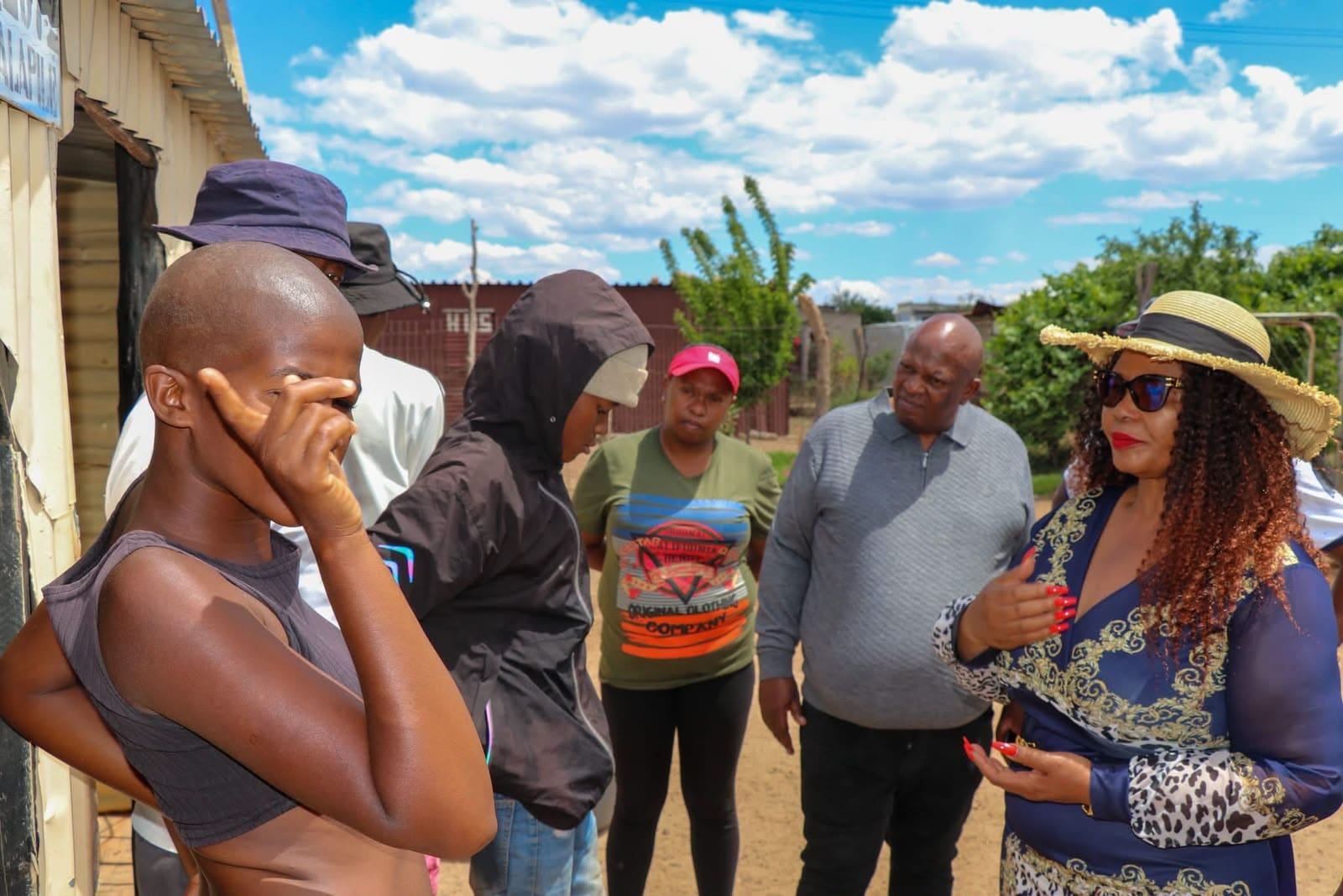
A family in Unaville Agricultural Holdings (AH), Lenasia South, has received food parcels and a wheelchair for a child living with a disability following a door-to-door outreach programme led by Gauteng MEC for Social Development, Nomantu Nkomo-Ralehoko, alongside departmental officials and stakeholders.
The visit formed part of the Gauteng Department of Social Development’s efforts to bring essential services directly to communities and identify households requiring assistance. The donation provided immediate relief to the family, addressing basic food needs while offering mobility support for the child. However, the intervention also points to the broader challenges faced by vulnerable households, particularly families caring for children with disabilities who may require continued social assistance and access to essential services.
The department has indicated that its involvement will extend beyond the distribution of the donated items, with social workers expected to maintain contact with the family and provide appropriate social services based on its needs. This continued engagement is an important part of social development interventions, as the challenges experienced by vulnerable households often extend beyond immediate material shortages. Ongoing support can help families access relevant services, identify additional needs and receive assistance aimed at improving their overall well-being.
For households caring for children with disabilities, access to appropriate mobility equipment and social services can play an important role in supporting daily care and participation in community life. While the wheelchair donation addresses an immediate need, the effectiveness of the intervention will also depend on the continuity of support and the family’s access to services that can help them manage their circumstances over time.

The Unaville outreach forms part of the department’s broader approach to community engagement, which involves working directly with residents and collaborating with stakeholders to respond to social challenges. Door-to-door programmes can help officials identify families who may be experiencing hardship and connect them with available government services. They also provide an opportunity to assess needs at household level rather than relying solely on residents to approach departmental offices for assistance. Through these interventions, the department seeks to strengthen access to social support for communities that may face barriers to obtaining essential services.
However, sustained engagement remains important in ensuring that assistance reaches those who need it and that identified challenges receive appropriate follow-up. The intervention in Unaville also highlights the importance of recognising the needs of children living with disabilities and the families who care for them.
Access to mobility equipment, social services and appropriate support can contribute to a child’s dignity and quality of life while easing some of the practical challenges faced by caregivers.For disability inclusion to be meaningful, however, support must extend beyond once-off donations. Continued access to relevant services, appropriate equipment and assistance tailored to individual needs remains essential.

The department’s commitment to continued engagement with the Unaville family provides an opportunity to ensure that the household’s needs are assessed and addressed through the appropriate support mechanisms.
Through its door-to-door outreach programme and partnerships with stakeholders, the Gauteng Department of Social Development says it remains focused on bringing services closer to residents and supporting vulnerable families across the province.
For the family in Unaville, the donation marks an initial step towards addressing immediate needs, with continued social work support expected to form part of the next stage of the intervention.


