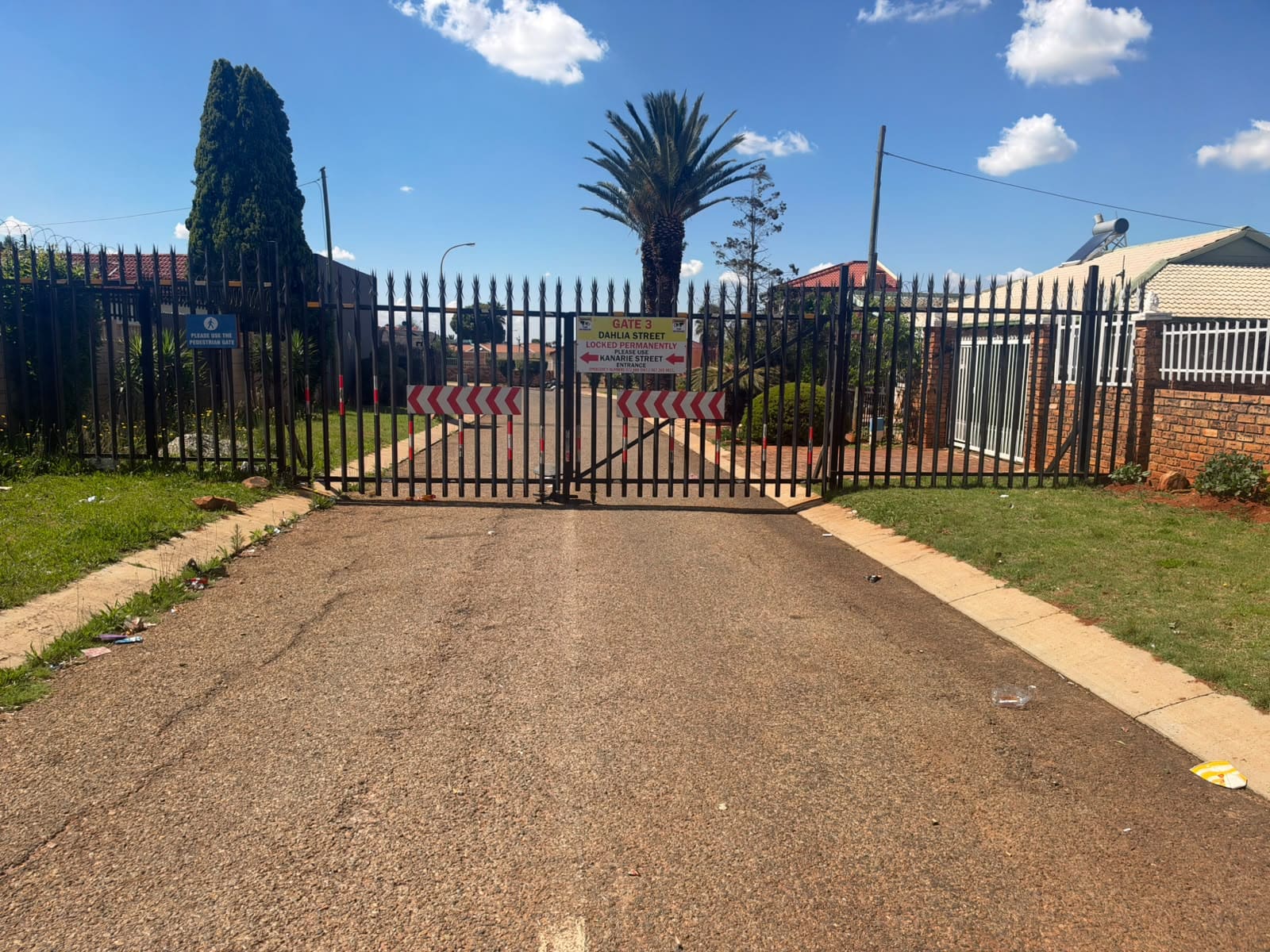
For most residents, walking a little further to reach another entrance may be an inconvenience.
For 78-year-old Ayesha, who lives in Dahlia Street in Lenasia South and relies on a walker for mobility, that extra distance can mean something very different.
Ayesha has approached GLOBE POST for assistance after struggling to gain access through the lower security gate next to her home on Dahlia Street.
She says the gate is kept locked, forcing her to walk around to another access point some distance away whenever she needs to enter or leave through that side of the street.
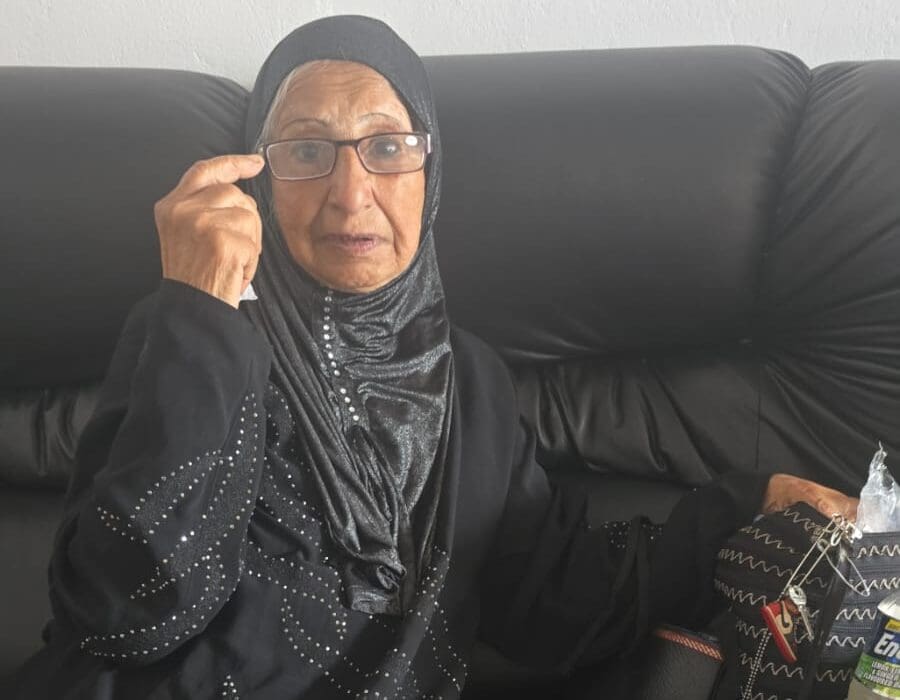
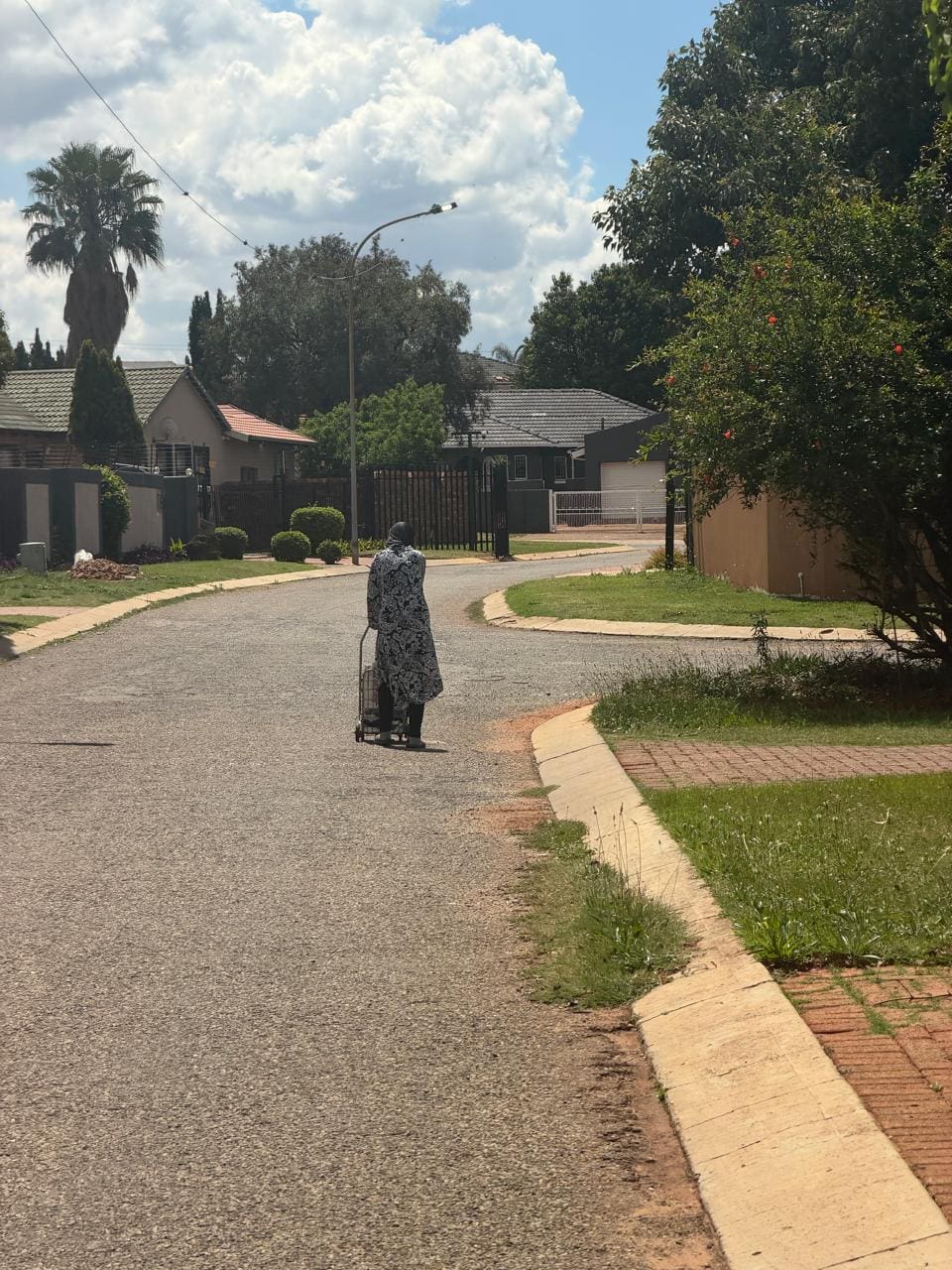
According to an intervention request prepared following her complaint, Ayesha lives at 21 Dahlia Street, has limited mobility and uses a walker. The matter has reportedly already been raised with the relevant street representative but has not yet been resolved.
Her situation raises a difficult question for communities trying to balance crime prevention with the everyday needs of elderly residents, people with disabilities and others with limited mobility.
The issue is particularly significant in Lenasia South, where the legality and operation of security access restrictions have been debated for several years.
A security measure becomes an accessibility issue
Residents across parts of Lenasia South have erected boom gates and other access restrictions over the years in response to concerns about crime.
Ayesha is not asking for security measures to be abandoned.
Rather, the concern is whether a practical arrangement can be made that allows an elderly resident with impaired mobility reasonable access without compromising the security arrangements residents believe are protecting their neighbourhood.
The intervention submitted on her behalf asks the Johannesburg Roads Agency and City of Johannesburg to clarify whether the Dahlia Street restriction is currently authorised, what conditions govern the operation of the lower gate and whether keeping that particular access point locked complies with those conditions.
It also asks authorities to assist in finding a practical solution that takes Ayesha’s mobility limitations into account.
The issue dates back several years
The dispute over security access restrictions in Lenasia South is not new.
28 September 2023: GLOBE POST reported that the Johannesburg Roads Agency was urging residents to follow the formal process for security access restrictions after the City had received only one application from Lenasia South and that application was incomplete.
At the time, City of Johannesburg Deputy Director of Transport Systems Management Nobuntu Duze said security restrictions had to comply with the City’s Security Access Restriction Policy, adopted in 2018.
The City raised concerns that unauthorised closures could affect access for emergency services such as ambulances and fire engines as well as municipal service providers. The application process required residents to apply through JRA before restrictions could be formally approved.
November 2024: According to subsequent GLOBE POST reporting, a Ward 120 Boom-Security Gate Committee was formed to assist communities with the process of legalising their security structures.
24 April 2025: Ward 120 Councillor Puseletso Nzimande and members of the Boom Gate Committee met City of Johannesburg transport officials, including Duze, to discuss speeding up the process of legalising security gates in Ward 120.
22 May 2025: The City acknowledged in correspondence that the security structures had played a role in deterring crime, while giving affected communities additional time to complete the required applications.
23 May 2025: City inspectors conducted site visits and assessments together with representatives of the Ward 120 Boom-Security Gate Committee and Ward Committee representatives.
9 July 2025: GLOBE POST reported that the City had granted Lenasia South communities a temporary reprieve allowing existing security access structures to remain in place until 31 August 2025 while applications were finalised.
At the time, residents were warned that structures that did not ultimately receive approval remained unlawful and could be removed. Nine gated communities were reportedly participating in the process.
14 July 2025: The committee was scheduled to meet City transport officials to present nine applications for checking before completion of the compliance process.
31 August 2025: The temporary reprieve announced by the City was due to expire.
What happened after the deadline?
More than a year after that deadline, Ayesha’s experience brings the issue back into focus.
It is presently unclear from the information available to GLOBE POST whether the Dahlia Street security access restriction received final City approval following the 2025 process, what operating conditions may have been attached to any approval, or whether the lower gate may lawfully remain locked in the manner described by Ayesha.
GLOBE POST is seeking clarity from the Johannesburg Roads Agency and the City of Johannesburg on the current status of the Dahlia Street access restriction.
Among the questions requiring clarification are:
Whether the Dahlia Street gates have received final approval from the City; whether approval allows the lower gate to remain permanently locked; what access arrangements are required for residents, emergency services and people with limited mobility; and who is responsible for ensuring that an approved security restriction is operated according to the City’s conditions.
Beyond legality, there is a human question
For Ayesha, however, the issue is not primarily about municipal processes, policies or paperwork.
It is about getting home.
At 78, walking with the assistance of a walker means that distance matters. A route that an able-bodied person may regard as a minor detour can become physically demanding for an elderly person with limited mobility.
Security measures are intended to protect vulnerable residents. Ayesha’s case raises the question of how those same measures can be implemented without unintentionally making daily life more difficult for the very residents they are meant to protect.
There may be practical solutions.
These could include controlled pedestrian access, provision of an appropriate key or access mechanism to affected residents, agreed opening periods, or another arrangement approved by the relevant authorities. The appropriate solution would, however, need to comply with the conditions governing the particular access restriction and take the security concerns of surrounding residents into account.
GLOBE POST has requested intervention and clarification from the City of Johannesburg/JRA and will give the relevant Dahlia Street representatives an opportunity to respond.